Say yes to the work your clients ask for. We deliver it behind you.
Kief Studio's MSP partner program gives MSPs and MSSPs two ways to work with us. Refer a client who needs custom software, a website or hosting and earn a referral fee that is disclosed to them. Or buy builds, hosting, website operations and security monitoring on what we host at a partner discount, set your own price, own the client, and we deliver unbranded.
What is an MSP partner program?
An MSP partner program is an agreement that lets a managed service provider sell or deliver work it does not do in-house, with a partner doing that work behind it. Most programs you find in search are run by software and hardware makers who want MSPs to resell licenses. Ours is different in kind: Kief Studio is a technology studio, so our MSP partner program covers custom builds, hosting, website operations and security monitoring on the systems we host.
The same applies to managed security service providers. An MSSP partner, in our sense, is an MSSP that sends us the application and hosting work its clients need, or sells that work under its own name while we deliver it. Either way, the client gets one accountable team behind the systems, and you keep doing the work you are best at. The broader split between the two kinds of provider is on our MSP and MSSP services page.
How does the Kief Studio MSP partner program work?
The MSP partner program has two paths. Referral: you introduce a client who needs custom software, a website or managed hosting, we take it from there, and you earn a referral fee that is disclosed to the client. White label: you buy builds and hosting from us at a partner discount, set your own price, own the client relationship, and we deliver unbranded behind you.
The two paths in the MSP partner program
Referral path
White-label path
Who owns the client
The client works with Kief Studio
You do
Whose name is on the work
Kief Studio
Yours
Who sets the client's cost
Kief Studio
You do
How you earn
A referral fee, disclosed to the client
Your margin over the partner discount
Who supports the client day to day
Kief Studio
You, with us behind you
Best fit
Work outside your services
Work your clients expect from you
You can use both paths with different clients. A partner might white label a website rebuild for a long-standing client and refer a larger custom application to us directly. The terms for each path come in writing after a short call, which is why this page lists no percentages or partner discounts.
What do we deliver for MSP partner program members?
We deliver the systems a business runs online, built and run by the same studio. That means custom web applications and websites, managed hosting on dedicated machines, website operations, and managed security monitoring on what we host. On a white-label engagement everything ships under your brand, and we stay out of the client relationship unless you bring us in.
Help with Linux servers, domain and email records, and Google Workspace and system accounts that sit behind those systems.
Hosting runs on LTFI, the system we built and operate for clients. LTFI runs on dedicated machines. You never install or maintain it, and neither does your client. No shared hosting. Dedicated infrastructure. Security is included on what we host, because security is a byproduct of good engineering.
What is outside the MSP partner program?
Some things MSP owners often ask for are not part of the MSP partner program, and it is better to say so early. We are not a round-the-clock help desk for your clients' laptops and printers. We do not run a white-label security operations center across your whole client base, and we do not monitor systems we do not host. After-hours response exists only where an agreement says so: 3am is a retainer, not a default.
What the program covers, and what stays with you
Work
In the program
Stays with you
Custom builds and websites
Yes
Client conversations on white label
Hosting on dedicated machines
Yes, on LTFI
Your price to the client on white label
Security monitoring
On what we host
Everything else you monitor
Laptops, printers, help desk
No
Yes
After-hours response
Only where written into the agreement
Your own after-hours promises
We also do not resell device management software, and we do not claim integrations with the ticketing and remote management tools MSPs run. If a client needs those, they stay with you. Penetration testing is a separate service of ours, scoped on its own, and it is not part of partner delivery by default.
How does a referral work?
You introduce us to a business that needs work outside your services, we talk with them directly, and if they become a client you earn a referral fee. A referral is an introduction, not an endorsement of us by you, and the client can decide without any pressure from either side.
You send a short note or make an email introduction.
We meet the client, listen, and tell them plainly if we are not the right fit.
We disclose the referral fee to the client before they sign.
If they become a client, the fee follows the written partner terms.
We tell the referred client about the fee. That is the honest thing to do, and it follows the principle in the FTC's Endorsement Guides questions and answers: when a connection between the person recommending something and the business behind it could change how people weigh the recommendation, it should be disclosed clearly. A client who knows about the fee and still chooses us is a better start for everyone.
How does white label work in the MSP partner program?
White label means your client sees your company and never needs to know we exist. You sell the build or the hosting, agree scope with your client, and bring the brief to us. We build to your brand, your contracts and your client's requirements, host and maintain it under your name when the engagement includes it, and hand work back through the channel you choose.
You set the price to your client and keep the relationship. You decide if you handle first questions yourself or bring us into a call. Our white-label development page covers the build side in more detail, and our knowledge base explains how white-label development works for agencies, which applies to MSPs in the same way.
What is LTFI, and can MSPs offer it to their clients?
LTFI is the system Kief Studio built to run client work: managed hosting, AI staff, approvals, an activity log and security on what we host. We share it with partners. On ltfi.ai, LTFI for MSPs and agencies describes the same two paths for LTFI itself: refer a client, or offer LTFI under your own brand while we deliver behind you.
This page and that one fit together. The MSP partner program here covers the builds, hosting and operations we deliver for your clients. The LTFI page covers the platform those clients use. To see what LTFI does for a business day to day, read what LTFI does, and for how white-label operations differ from a server with your logo on it, see white-label hosting vs white-label operations.
Why do MSPs and MSSPs look for a build and security partner?
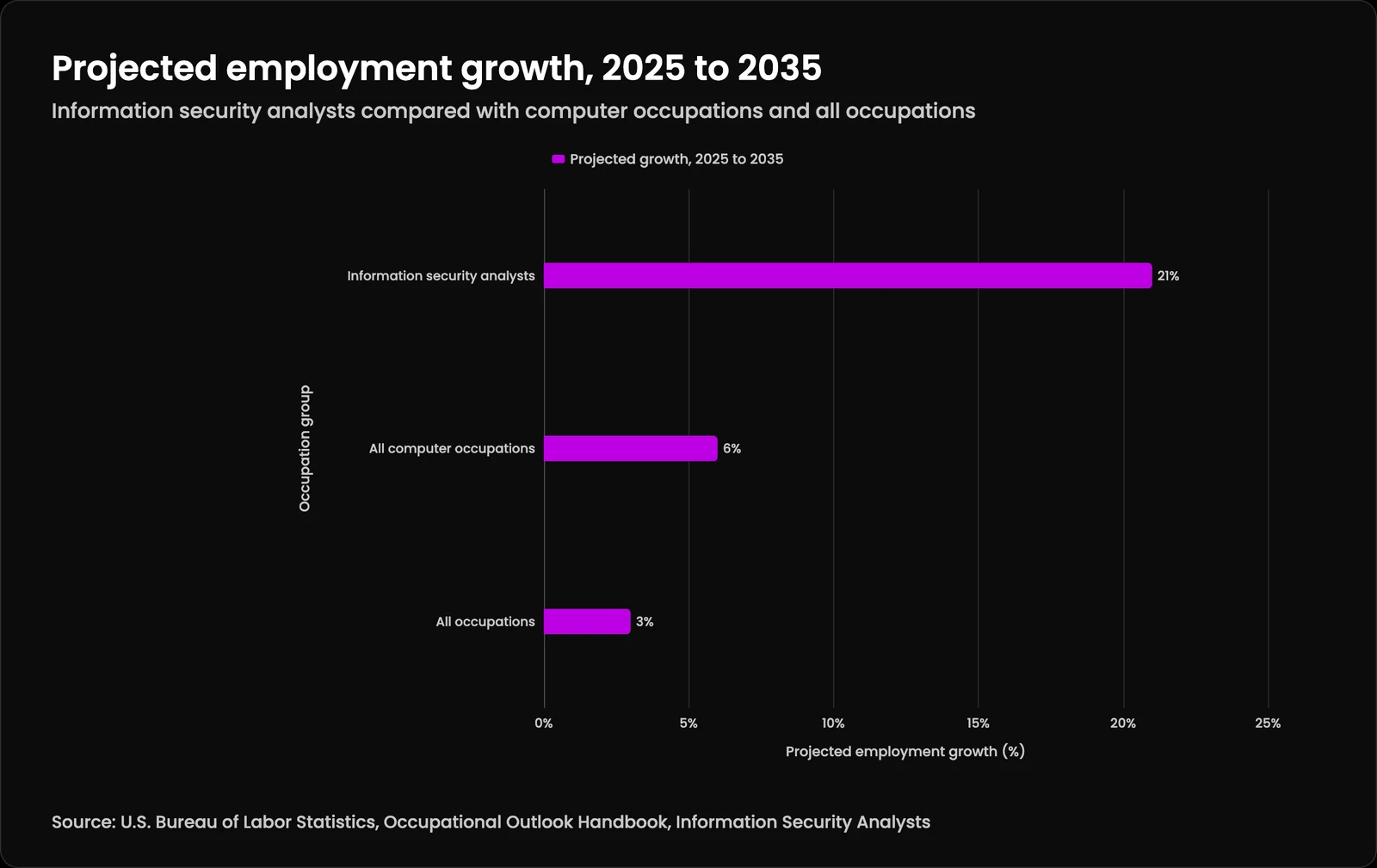
Because the skills clients ask for are hard to hire and harder to keep busy. The Bureau of Labor Statistics Occupational Outlook Handbook projects employment of information security analysts to grow 21% from 2025 to 2035, against 6% for all computer occupations and 3% for all occupations, with about 14,100 openings a year. It also notes that analysts sometimes must be on call outside normal business hours for emergencies.
A partner lets you say yes to a custom application, a website rebuild or hosting that needs real security work without hiring for a skill set you will use a few times a year. It also keeps a client from shopping that work elsewhere. The cost of saying no is often the client relationship itself.
Projected employment growth, 2025 to 2035: the data
Occupation group
Projected growth, 2025 to 2035
Information security analysts
21%
All computer occupations
6%
All occupations
3%
How do we keep a partnership safe for your clients?
We treat our access to your clients as the risk it is. A joint advisory led by CISA, Protecting Against Cyber Threats to Managed Service Providers and their Customers, warns that attackers target providers because one provider's privileged access can reach many customers. It recommends multi-factor sign-in on every provider account, access limited to the systems the provider manages, and accounts switched off when work ends. We work the same way.
What we put in writing with partners
Item
What we agree
Why
Access
Named accounts, multi-factor sign-in, least privilege
Provider accounts reach many clients
Offboarding
Access removed when work ends
Forgotten accounts are a common gap
Incidents
How and when we tell you
You may owe your client notice
Regulated data
The agreements the law requires, such as a business associate agreement
Duties flow down the chain
Ownership
Who owns code, domains and logins
Clean exits protect the client
Regulated clients add written duties. HHS guidance on HIPAA and cloud computing says a subcontractor that stores electronic protected health information for a business associate is itself a business associate, so a healthcare white-label engagement needs that agreement chain. Massachusetts' 201 CMR 17.00 checklist asks businesses to require security measures from service providers by contract.
What are the MSP partner program guardrails?
The guardrails keep the MSP partner program honest for partners and fair to clients. They are short, and they apply to every partner on either path. If one of them would get in the way of a deal, we would rather lose the deal.
A referral is an introduction, not an endorsement.
The referral fee is disclosed to the referred client.
We never use a partner's name in public without written permission.
Advisors never refer their own employer or that employer's clients.
On white label, we stay out of the client relationship unless you bring us in.
Who is the MSP partner program for?
The MSP partner program fits MSPs and MSSPs whose clients ask for work beyond devices and help desk: custom applications, websites that need real care, hosting with security included, or a system that outgrew off-the-shelf tools. It also fits IT consultants and agencies who sell to the same businesses. It fits less well if every client need is device management, which is work you already do well.
Partners in Massachusetts can meet us in Shrewsbury, but the program is not limited to the region. Founded 2022. Operating together since 2012. 13+ year client relationships.
What should an MSP ask any build or security partner?
Ask the questions your client would ask you, then the ones only a partner can answer. Who owns the code, the domains and the admin logins? What happens to your client if the partner fails, or if you part ways? How does the partner protect its own access? LTFI's article on MSP partner contract clauses covers ownership, escalation and a clean exit.
Start with a short conversation about your clients and the work you turn away today. We send the written partner terms after that call. When the first project comes in, we run technology onboarding for that client: access collected securely, credentials in a vault, an inventory of systems, and urgent risks handled first.
After that, the MSP partner program settles into a routine: briefs in, work out under the brand you choose, and plain-language reports you can forward or rewrite. If you want to read how other agencies use a build partner first, our notes on a white-label development partner for agencies and why your clients don't need to know we exist are a good start.
What we do
Agree the path for each client: referral or white label.
Build, host and run the systems under the brand you choose.
Monitor and harden what we host, with access limited and written down.
Report in plain language you can forward or rewrite for your client.
Who it is for
MSPs, MSSPs and IT consultants whose clients ask for custom applications, websites or hosting with security included, and who want to refer that work or sell it under their own brand.
When to look elsewhere
Outsourced help desk for laptops and printers, or a white-label security operations center across your whole client base.
What we can stand behind
Founded 2022. Operating together since 2012.
No shared hosting. Dedicated infrastructure.
Security is a byproduct of good engineering.
MSP and MSSP partner program: common questions
What is an MSP partner program?
An MSP partner program is an agreement that lets a managed service provider refer or resell work done by a partner. Most are run by software makers for license resale. Kief Studio's MSP partner program covers custom builds, hosting, website operations and security monitoring on what we host, through referral or white label.
What is a managed service provider partner?
A managed service provider partner is a company that works with an MSP to deliver something the MSP does not do in-house, such as software, security tools or custom development. Kief Studio partners with MSPs as a build and hosting studio that can deliver under the MSP's brand.
What are MSP partners?
MSP partners are the companies an MSP relies on to serve clients: software and hardware makers, distributors, security providers and service firms. Some partnerships are about reselling products. Others, like ours, are about delivering work such as custom applications and hosting that the MSP sells or refers.
What is an MSSP partner?
An MSSP partner is a company that works with a managed security service provider to serve its clients, either supplying tools or delivering services alongside it. For us, it means an MSSP that refers or white labels the application, website and hosting work its clients need, with security included on what we host.
What does it mean to be a white label partner?
Being a white label partner means one company does the work and another sells it under its own name. In our program, you own the client and set the price, and we build and host behind you, unbranded. Your client deals with you, and we stay out of the relationship unless you bring us in.
What are white label services?
White label services are services one company delivers and another company sells as its own. Common examples are web development, hosting, SEO and help desk. The client relationship, the brand and the price belong to the reseller, while the delivery partner does the work out of view.
Is white labeling illegal?
No. White labeling is an ordinary, widely used business arrangement. What matters is honesty: contracts should be clear between partners, claims to customers should be true, and regulated data still needs the agreements the law requires. If your situation is unusual, ask your own attorney before you sign.
Can you make money with a white label?
Yes. On our white-label path you buy at a partner discount and set your own price, so your margin is the difference, and the client relationship stays with you. The bigger gain is often saying yes to work you would otherwise turn away, which keeps the client from shopping elsewhere.
How much does it cost to white label?
It depends on the work: the size of the build, the hosting needed, how much ongoing care the system needs and whether security monitoring is included. Partners receive written terms after a short call, and every quote explains its cost drivers so you can set your own price with confidence.
What is the meaning of referral program?
A referral program pays or rewards someone for introducing a new customer to a business. In our MSP partner program, a referral is an introduction, not an endorsement. The referred client is told about the fee before they sign, and the fee follows written partner terms.
How does a MSP make money?
Most MSPs earn recurring fees for managing a client's technology under contract, plus project work and resale of software and hardware. Partner programs add income from work the MSP cannot staff, either as a referral fee or as margin on white-label delivery, without new hires for rare skills.
What software do MSPs use?
MSPs commonly run ticketing and billing software, remote monitoring and management tools, backup, documentation and security tools. Our partner work does not depend on which ones you use, because we deliver builds, hosting and website operations rather than device management, and you keep your own tools and processes.