


Brian GagneCo-founder and CTO, Kief Studio
- Published
- 12 min read

TL;DR: Small business cybersecurity cost has no honest single price. It depends on the data you hold, how many people and devices you have, what you already run, who regulates you, and whether anyone watches after hours. Budget in layers: basics first, then a written program, monitoring, testing and insurance, sized to your real risk.
Search for small business cybersecurity cost and you get page after page of security firms quoting their own prices. None of them knows what you run.
So this is the other version: what moves the number, what to pay for first, what a breach costs in public data, and what Massachusetts law adds. Every figure below comes from a government agency or a named research study.
What drives small business cybersecurity cost?
Two businesses with the same headcount can have very different security bills. Five things do most of the work.
1. The data you hold
A shop that stores customer names and order history has a smaller problem than a practice that stores Social Security numbers, health records or bank details. Massachusetts law says the same: 201 CMR 17.00 sizes the security program a business needs to "the size, scope and type of business," "the amount of resources available," "the amount of stored data," and "the need for security and confidentiality of both consumer and employee information." (201 CMR 17.03, via Cornell LII (opens in a new tab))
That is the most useful sentence in the regulation for budgeting. The law expects a ten-person office to spend like a ten-person office, as long as the protection fits the data. Data type is the biggest single driver of small business cybersecurity cost.
2. People, devices and accounts
Most security tools and services are counted per something: per user, per laptop, per server, per mailbox. More people means more accounts to protect and more laptops to patch. A business with 12 staff and 40 cloud accounts (email, payroll, the scheduling app, the bank, the shared drive) has 40 front doors, not 12.
3. What you already run
An office already on modern cloud email with multifactor login turned on starts from a different place than one with a server in the closet, a firewall nobody has logged into since 2019, and Windows 10 machines. Old systems cost more to protect. Our note on whether a small business needs a firewall is one example.
4. Who is asking
Your regulator, your biggest customer and your insurer can each set the floor. A health practice has HIPAA. A manufacturer selling to a large company may get a security questionnaire with the purchase order. Each one turns "nice to have" into "required by Friday."
5. How much of the day someone is watching
Watching business hours is one cost. Watching nights and weekends with a person who can act is a much bigger one, because it takes several people to cover 168 hours a week. This is usually the single largest swing in any small business cybersecurity cost quote, so ask what hours a quote covers before you compare two of them.
How much should a small business spend on cybersecurity?
The straight answer: there is no reputable, vendor-neutral dollar figure. The cost pages that rank for this question are written by firms selling the service, quoting their own prices. The guidance from CISA, the FTC and NIST tells you what to do, not what to pay.
The better question is what your budget should cover, in what order. Build the small business cybersecurity cost line in layers, and stop adding layers when the next one costs more than the risk it removes.
For the bigger picture, I wrote a line-by-line small business IT budget (opens in a new tab) that puts security next to support, software and hardware.
What should a small business pay for first?
Five layers, roughly in the order they pay off. The first one is mostly time, not money.
Layer 1: the basics that cost the least
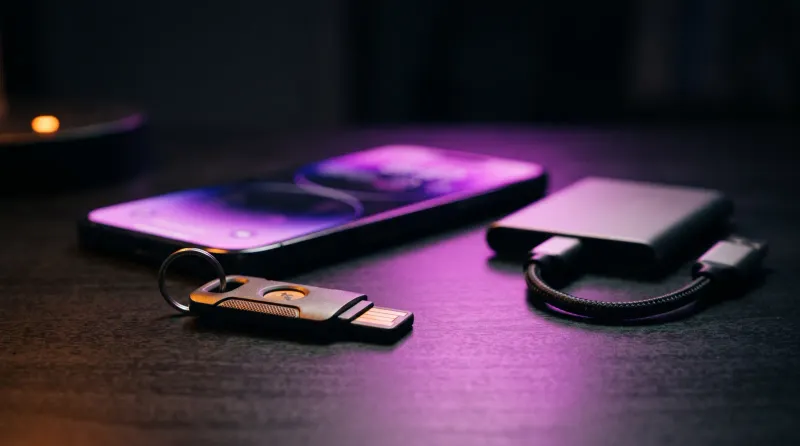
CISA's guidance for small businesses is blunt about where to start. On multifactor login: "Any form of MFA is better than no MFA," and it should be "mandated using technical controls, not faith." On backups: "It's critical to regularly test partial and full restores." (CISA, Cyber Guidance for Small Businesses, updated April 2024 (opens in a new tab))
CISA's MFA page puts it simply: "Users who enable MFA are significantly less likely to get hacked." (CISA, More than a Password (opens in a new tab))
Your MFA and backups list for this layer:
- Multifactor login on email, banking, payroll and any admin account.
- Automatic updates on every laptop, phone and server, with someone checking they actually ran.
- A password manager for the team, so shared passwords stop living in a spreadsheet.
- Backups that are tested, not just running. Our note on the 3-2-1 backup rule covers the setup.
- Short staff training on phishing and payment fraud, repeated.
Most of these come with tools you already pay for. The cost is the hours to turn them on and the discipline to check them. This is the cheapest part of any small business cybersecurity cost, and the part the government guidance puts first. Amelia, my wife and Kief Studio's co-founder and CEO, wrote up the first five cybersecurity steps for a small business (opens in a new tab) in plain order.
Layer 2: a written program
In Massachusetts, a business that owns or licenses residents' personal information has to "develop, implement, and maintain a comprehensive information security program," include "ongoing employee (including temporary and contract employee) training," and review the scope "at least annually." (201 CMR 17.03 (opens in a new tab)) Most people call that document a WISP.
The cost here is mostly time: an inventory of what data you hold and where, who can reach it, and what you do when something goes wrong. Amelia's guide to Massachusetts WISP requirements (opens in a new tab) lists what goes in it. And compliance is not the same as security: the document has to describe what you really do.
Layer 3: someone watching
Endpoint detection software on each device, plus a person who reads the alerts and acts on them, is where the monthly small business cybersecurity cost starts to grow. The drivers are the device count, the number of systems feeding alerts, the hours covered, and whether response is included or only notification.
Why it matters: IBM's 2026 Cost of a Data Breach study puts the average time to identify and contain a breach at 247 days. (IBM, Cost of a Data Breach 2026 (opens in a new tab)) Nobody watching means that clock runs. Our note on managed detection and response for a small business breaks down what that layer includes, and managed security monitoring is how we run it for systems we host.
Layer 4: testing
Vulnerability scanning finds known weaknesses on a schedule. A penetration test is a scoped, authorized attack that proves what someone could actually reach. Penetration test cost is driven by scope: how many applications, cloud accounts and network addresses, whether it is external only or internal too, how deep the testers go, and whether a retest of the fixes is included.
Patching is where testing pays off. In Verizon's 2026 Data Breach Investigations Report, exploiting a known software flaw was the most common way breaches started, at 31%. (Verizon DBIR 2026 executive summary (opens in a new tab)) See our notes on vulnerability management for a small team and penetration testing for a small business.
Layer 5: cyber insurance
Cyber insurance requirements can shape the budget as much as a regulator does. MyRHC has a cyber insurance readiness checklist (opens in a new tab) to work through before you apply.
The National Association of Insurance Commissioners is direct about its limits: cyber insurance "is not a substitute for" in-house cybersecurity measures, and "it cannot eliminate the need for strong internal defenses." (NAIC, Report on the Cyber Insurance Market, October 2024 (opens in a new tab))
What does a data breach cost a small business?
The other side of the budget is what happens without it. Here are the published numbers.
- Average cost of a data breach. IBM's 2026 study puts the global average at $4.99 million and the US average at $11.5 million. (IBM, 2026 (opens in a new tab)) That is an average across the organizations IBM studied, not a small business figure.
- Business email compromise. The FBI's Internet Crime Complaint Center logged 24,768 business email compromise complaints in 2025, with $3,046,598,558 in reported losses. (FBI IC3, 2025 Internet Crime Report (opens in a new tab)) Think of a fake invoice paid on a convincing email.
- Small businesses specifically. Verizon's 2026 report counted 7,152 confirmed breaches at small and medium-sized businesses and says small organizations "are disproportionately impacted by Ransomware." A third party was involved in 55% of those breaches. (Verizon DBIR 2026 (opens in a new tab))
Put those numbers next to your small business cybersecurity cost estimate and the arithmetic usually makes the decision for you. For a calm walk through what happens hour by hour, read our note on the first 24 hours after a breach.
What does Massachusetts law add to the cost of a breach?
Massachusetts puts specific costs on a breach that any small business cybersecurity cost estimate should count.
- Notice. A business that owns or licenses the data must notify the Attorney General, the Director of Consumer Affairs and Business Regulation, and each affected resident "as soon as practicable and without unreasonable delay." (M.G.L. c. 93H, s. 3 (opens in a new tab))
- Credit monitoring. When the breach includes a Social Security number, the business must offer credit monitoring "for a period of not less than 18 months," "at no cost" to the resident. (M.G.L. c. 93H, s. 3A (opens in a new tab))
- Enforcement. The Attorney General may bring an action under the state's consumer protection law (c. 93H, s. 6 (opens in a new tab)), which allows "a civil penalty of not more than five thousand dollars for each such violation." (M.G.L. c. 93A, s. 4 (opens in a new tab))
Amelia worked through the cost of a data breach in Massachusetts (opens in a new tab) in detail.
Is it cheaper to hire a security employee or outsource?
For most small businesses, one full-time security hire is the most expensive way to buy a partial answer.
The in-house small business cybersecurity cost
Information security analysts in the Worcester area had a median annual wage of $128,630 in 2025; the Massachusetts median was $136,550 and the national median $129,180. (BLS wage data via O*NET, 2025 (opens in a new tab); BLS Occupational Outlook Handbook (opens in a new tab))
Wages are not the whole cost. In June 2026, wages and salaries were 70.0% of private employers' compensation costs, with benefits the other 30.0%. (BLS, Employer Costs for Employee Compensation, June 2026 (opens in a new tab)) If benefits follow that average, one analyst at the Worcester median costs roughly $184,000 a year before tools, training or a single alert. That is our arithmetic on the BLS figures, not a quote.
And one person covers about 40 of the week's 168 hours, takes vacations, and has to know firewalls, cloud accounts, endpoints and incident response at once. Outsourcing buys a team's hours and tools; an in-house hire buys someone who knows your business deeply. Some businesses end up with both.
Small business cybersecurity cost in Massachusetts: the local picture
The FBI's 2025 report counted 22,936 complaints from Massachusetts with $410,924,066 in reported losses, and the state ranked fifth for complaints per 100,000 residents. (FBI IC3, 2025 Internet Crime Report (opens in a new tab)) Those are complaints from people and businesses together, but they say this state is not a quiet corner.

Two hypothetical examples. A nine-person physical therapy practice in Westborough holds patient records and insurance details. Its small business cybersecurity cost leans toward layers 2 and 3: a written program that covers HIPAA and 201 CMR 17.00, tested backups of the scheduling and records systems, and someone watching the endpoints.
A 14-person bookkeeping office in Grafton holds Social Security numbers and bank details for hundreds of clients, so the Massachusetts credit monitoring rule applies to its worst day. Its money goes first to layer 1 (MFA everywhere, payment verification by phone so a fake email cannot move money) and to layer 5, because its insurer will ask hard questions at renewal.
Same state, similar size, two very different small business cybersecurity cost lines.
How do you compare security quotes?
Two quotes for small business cybersecurity cost are only comparable when they cover the same things. Ask each one the same five questions:
- What is counted? Users, devices, servers, mailboxes or locations.
- What hours are covered, and is response included or only an email that something happened?
- What is excluded? Incident response, forensics, testing and after-hours work are often extra.
- What proof do you get? A monthly report of what was patched, what was found and what was fixed.
- Does the contract require the security measures 201 CMR 17.00 expects of service providers? The regulation requires it "by contract." (201 CMR 17.03 (opens in a new tab))
For a neutral starting point, NIST's Small Business Cybersecurity Corner (opens in a new tab) collects free resources, and our note on what managed IT services actually include helps you read a scope.
Frequently asked questions
How much does it cost to hire a cyber security company?
It depends on what they cover: users and devices, hours, whether response and testing are included, and what your data requires. No neutral source publishes a reliable range, so compare quotes on the same scope.
Which company is best for cyber security?
The one whose scope fits your data and systems. Check what they count, the hours, the exclusions, the monthly proof, and whether the contract includes the security terms Massachusetts expects of service providers.
Why do small business cybersecurity cost estimates vary so much?
Because they cover different things. One quote may count only laptops during business hours; another may include servers, cloud accounts, round-the-clock response and testing. Compare scope and hours first, then price.
How much should a small business spend on cybersecurity?
Enough to cover the layers your risk calls for, in order: MFA, updates, tested backups and training; a written program; monitoring; testing; and insurance. Small business cybersecurity cost grows with the sensitivity of your data and the hours you need watched.
Is it cheaper to hire a security employee or outsource?
Usually outsourcing, for a small business. The 2025 median wage for an information security analyst in the Worcester area was $128,630 before benefits, and one person cannot cover nights, weekends and every specialty.
How much does cybersecurity pay in Massachusetts?
BLS data via O*NET puts the 2025 median annual wage for information security analysts at $136,550 in Massachusetts and $128,630 in the Worcester area.
Does Massachusetts require a small business to have a security program?
If it owns or licenses personal information about Massachusetts residents, yes. 201 CMR 17.00 requires a written information security program sized to the business, with employee training and an annual review.
Does cyber insurance replace security spending?
No. The NAIC says cyber insurance is not a substitute for in-house security measures. It pays for some losses; it does not stop the breach.
This article is general information, not legal advice. Kief Studio is not a law firm, and reading it does not create an attorney-client relationship. Laws and regulations change, so check the current text and talk with a licensed Massachusetts attorney about your situation.
Where we fit
Protect is the Kief Studio line for security: authorized penetration testing, vulnerability management, threat detection, architecture review, zero trust, managed monitoring, and compliance help. We test and harden systems we also know how to build.
For the layers above, that means managed security monitoring for the systems we host on LTFI (opens in a new tab), vulnerability management that ranks findings by your real exposure and verifies each fix, and penetration testing with a written scope before anything starts. We do not publish a rate card. We price custom work around your use case, the size of your business, what you need and the stack you already have, and you get a number before any work starts. Many clients keep their IT provider for laptops and help desk, and we work alongside them.
We are in Shrewsbury and work with businesses across Worcester, Westborough, Grafton and the rest of Worcester County.
First conversation is free. No commitment.
Co-founder and CTO, Kief Studio