


Brian GagneCo-founder and CTO, Kief Studio
- Published
- 12 min read
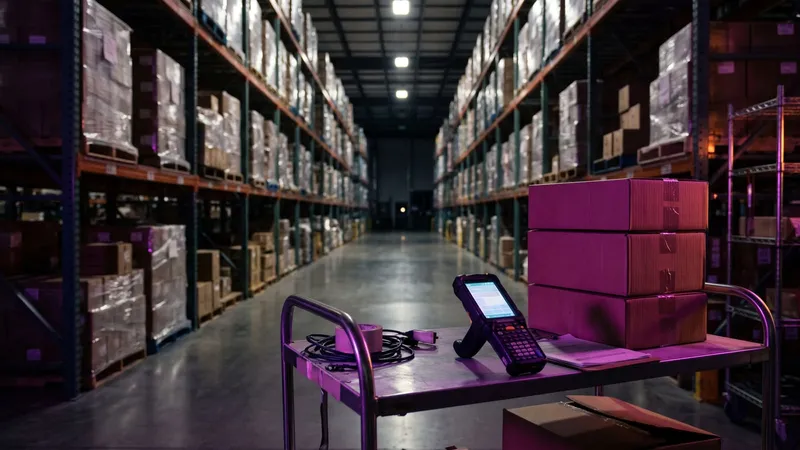
TL;DR: Wholesale distribution software is usually six tools, not one: inventory and warehouse management, order management, EDI for trading with large customers, accounting, a CRM, and a B2B ordering portal. The right setup is the one where those six agree on stock, price and orders. Often that means connecting what you have before replacing anything.
Wholesale distribution software in Massachusetts gets shopped the same way it does everywhere: somebody sees a demo, likes the screens, and asks for a quote. I would start somewhere else. Before you look at any product, write down where the work actually moves in your building, from the order coming in to the truck going out to the invoice getting paid. That map decides what you need far better than a feature list.
I am not going to name wholesale distribution software products. The right pick depends on your process, not on a ranking.
What wholesale distribution software do distributors use?
The Bureau of Labor Statistics describes the wholesale sector as "establishments engaged in wholesaling merchandise, generally without transformation." (BLS, Industries at a Glance: Wholesale Trade (opens in a new tab)) You buy, you hold, you sell, you ship. Every piece of wholesale distribution software exists to keep those four steps honest. By category, it looks like this:
- Inventory and warehouse management. What you have, where it sits, and what is committed. A basic inventory tool tracks counts by item. A warehouse management system adds bin locations, picking, receiving, cycle counts and scanning. If you hold stock in more than one place, this is the system that has to be right.
- Order management. Quotes, sales orders, backorders, partial shipments and returns. It decides what gets allocated to whom when stock is short.
- EDI. Electronic data interchange, the structured documents large retailers and buyers use to send purchase orders and receive ship notices and invoices. More on this below, because it is often the piece that forces the whole conversation.
- Accounting. The ledger, receivables, payables, and the cost of what you sold. It should receive totals from the systems above, not be the place operations happen.
- CRM. Accounts, contacts, sales reps' pipelines and follow ups. In wholesale it also holds the context behind each account's terms.
- A B2B ordering portal. A place where your customers log in, see their own prices and availability, reorder, and check order status without calling the counter.
Some businesses get most of these from one packaged system; others connect four or five tools. Either works if the stock number, the customer's price and the order status agree everywhere a person looks. For the CRM line of your wholesale distribution software, I priced out what a CRM costs a small business (opens in a new tab).
What does wholesale look like in Central Massachusetts?
Smaller than most wholesale distribution software is built for. I counted from the Census Bureau's 2023 County Business Patterns file for Worcester County. The county had 783 wholesale trade establishments employing 13,541 people, with an annual payroll of about $1.14 billion. (U.S. Census Bureau, County Business Patterns 2023 (opens in a new tab))
- 338 of those 783 establishments, 43%, had fewer than 5 employees.
- 648, or 83%, had fewer than 20.
- 497 sold durable goods, 196 sold nondurable goods such as groceries, chemicals and drugs, and 90 were agents and brokers.
- The single largest group was machinery, equipment and supplies, with 131 establishments.
Now the second fact. The Bureau of Labor Statistics counts wholesale jobs and pay a different way, from unemployment insurance records, so its numbers will not match the Census count exactly. In its 2025 figures, private wholesale jobs in Worcester County paid an average of $104,906 a year, against $73,316 across all private employers in the county. (BLS, Quarterly Census of Employment and Wages, Worcester County, 2025 (opens in a new tab))
Put those side by side. Most distributors here are small teams, and the people on those teams are well paid. A small, expensive team is exactly the team that should not spend its afternoons retyping orders.
Here is the math on one habit. Say someone at a distributor in Millbury or Westborough spends 45 minutes a day keying orders from emailed PDFs. That is about 188 hours over 250 working days. The county's average wholesale pay works out to roughly $50 an hour on a 2,080 hour year. Even at half that rate, it is several thousand dollars a year spent copying numbers that already exist in a computer. That is an example, not a client; redo the math with your own numbers.
Where does wholesale distribution software break down for a Massachusetts distributor?
In the same five places, over and over. If two or more of these sound like your week, your wholesale distribution software is worth a real look.
Stock across locations
A second warehouse, a showroom, a van that carries stock, a consignment shelf at a customer. Each location is another place for the count on screen and the count on the shelf to drift apart. Record errors are more common than most owners assume. In a study of nearly 370,000 inventory records across 37 stores of one retailer, researchers found 65% to be inaccurate, meaning the system's quantity did not match what was physically there. (DeHoratius and Raman, Management Science, 2008 (opens in a new tab)) That was retail stores, not a warehouse, but the causes they found, such as item cost, how fast an item sells and how it is distributed, exist in a distributor too.
Stock is also money sitting still. At the end of August 2026, U.S. merchant wholesalers, not counting manufacturers' own sales offices, held about $1.01 trillion in inventory, and their inventories to sales ratio was 1.23, meaning about 1.23 months of sales sat on shelves. (U.S. Census Bureau, Monthly Wholesale Trade, revised October 2026 (opens in a new tab)) When the count is wrong, you either buy stock you already have or promise stock you do not.
Amelia, my wife and Kief Studio's co-founder and CEO, wrote about the hardware problem nobody mentions during software demos (opens in a new tab). In a warehouse that means scanners, label printers and the Wi-Fi in the back corner. Check them before you pick the wholesale distribution software that depends on them.
Customer-specific pricing
Wholesale pricing is rarely one price list. There are contract prices, volume breaks, rebates, freight terms and the deal a rep made on the phone last March. When those rules live in a rep's head or a spreadsheet, two things happen. Customers get quoted different prices by different people, and margins leak in ways nobody sees until year end. Whatever wholesale distribution software you choose, the price rules need one home, and every channel, the counter, the rep, the portal and EDI, has to read from it.
EDI with big retailers
Selling to a large retailer or a hospital system often means trading documents by EDI, on their schedule and in their format. Covered in full below.
Lot and expiry tracking
Food, chemicals, medical supplies and drugs often need lot numbers and expiration dates tracked from receiving to shipping, so a recall can find every customer who got a given lot. Two federal rules make this concrete:
- Food. FDA's Food Traceability Rule covers "persons who manufacture, process, pack, or hold foods" on its Food Traceability List. When FDA asks during an outbreak or recall, covered firms must produce "an electronic sortable spreadsheet containing relevant traceability information" within 24 hours. FDA has said it will not enforce the rule before July 20, 2028, after Congress directed it not to. (FDA, Food Traceability Rule (opens in a new tab); Federal Register, August 2025 (opens in a new tab))
- Prescription drugs. The Drug Supply Chain Security Act sets out, in FDA's words, "an interoperable and electronic way to identify and trace certain prescription drugs at the package level." (FDA, DSCSA (opens in a new tab))
Whether either applies to you is a question for your counsel, not your wholesale distribution software vendor. The software question is simpler: can your system tell you, in minutes, every customer who received lot 4471? If the honest answer involves a filing cabinet, that is the gap. We covered the general version of this in when your system of record disagrees with reality.
Returns
When an item comes back, someone decides whether it goes back on the shelf, gets scrapped or returns to the manufacturer, and three systems need to hear about it: inventory, accounting and the customer's account. If a return only exists as a credit memo, your stock count is wrong from that moment on. Good wholesale distribution software treats a return as its own order type, with a reason code and a decision, not a note.
Why does EDI matter so much to a distributor?
Because a large share of wholesale already happens machine to machine. The Census Bureau defines EDI as "the exchange of documents in standardized electronic form between parties in an automated manner." (U.S. Census Bureau, E-Commerce Glossary (opens in a new tab)) Its e-commerce count for wholesalers includes orders placed over EDI networks, extranets, email and the web.
By that measure, U.S. merchant wholesalers reported $3.76 trillion in e-commerce sales in 2022, about 33% of their $11.38 trillion in total sales. Census flags the 2022 e-commerce estimate for a low response rate and asks users to read it with caution, but the share has held near a third since 2019 in its own tables. (U.S. Census Bureau, Annual Wholesale Trade Survey 2022 (opens in a new tab))
The common EDI documents come from the X12 standards, a body chartered by the American National Standards Institute. In a typical flow:
- The customer sends an 850 Purchase Order.
- You may answer with an 855, which "may affirm the order or may indicate changes" to it.
- You send an 856 Ship Notice/Manifest, which X12 calls "a critical transaction that ties the order to the delivery process."
- You send an 810 Invoice.
(X12, Supply Chain Transaction Flow (opens in a new tab))
The trap is treating EDI as a translator bolted to the side of your wholesale distribution software. If the 850 lands in a separate inbox and someone keys it into the order system, you have paid for EDI and kept the typing. The 856 is worse. It has to describe what is actually on the truck, down to the case or pallet markings, so it can only be right if your warehouse system knows what was picked. That is why EDI so often exposes an inventory problem that was there all along.
Should you integrate your wholesale distribution software or replace it?
Start by assuming you connect, and make the case for replacing. Here is the test I use.

Integrate when:
- Each tool does its own job well and your people like using it.
- The pain is copying data between them, not the tools themselves.
- The tools offer an authorized API, so a connection does not depend on scraping a screen.
- You can name the one system that owns each fact: stock, price, customer, order.
Replace when:
- The core system cannot hold what you need, such as lots, bins or multiple locations, no matter how it is connected.
- Your team has rebuilt spreadsheets around it to get through the day.
- The vendor has stopped updating it, or it runs on one aging machine nobody wants to restart.
- You pay for overlapping tools that each own part of the same fact. I wrote about that pattern as the subscription trap (opens in a new tab).
Build when: your process is the reason customers pick you, packaged systems keep forcing you to give it up, and the workarounds cost more than the build. Our knowledge base covers ERP systems and API integration in plain terms.
There is a security side to any wholesale distribution software, especially a customer portal. A portal shows each customer their own prices and orders, which means it must never show them someone else's. OWASP's Top 10 for 2025 keeps broken access control at number one, and lists "permitting viewing or editing someone else's account by providing its unique identifier" as a common flaw. (OWASP Top 10, 2025, A01 (opens in a new tab)) In wholesale, that flaw shows your best customer's contract price to your second best customer. Ask how it was tested.
What should you ask before you buy, build or connect wholesale distribution software?
Bring these to any wholesale distribution software vendor, implementer or builder, us included, and write down the answers.
- Which system owns each fact? Stock, price, customer, order. One owner each, and everything else reads from it.
- How does stock stay right across locations? Ask about transfers, cycle counts and what happens when a scan fails.
- Where do customer prices live? Can the counter, the reps, the portal and EDI all quote from the same rules?
- How does an EDI order arrive? Straight into the order system, or into an inbox for someone to key? How is the ship notice built?
- Can you trace a lot in minutes? Ask for a live demo with a made-up recall, from lot number to customer list.
- How is a return handled? Its own order type with a reason and a decision, or a credit memo?
- What connects, and how? Accounting, shipping, the storefront. Authorized APIs only, and who watches each connection when it fails.
- How does our data move, and how do we leave? Get the export format in writing, test it on a sample, and confirm your history stays readable.
If reporting is the real pain, start there. Margin by customer or by item is often a data problem under the tools, not a reason for new wholesale distribution software on top. Amelia's piece on knowing where your numbers come from (opens in a new tab) is a good test of whether your reports can be trusted today.
Frequently asked questions
What software do wholesalers use?
Six categories of wholesale distribution software cover most of it: inventory and warehouse management, order management, EDI, accounting, a CRM, and a B2B ordering portal. Some come in one packaged system; many distributors run several tools connected together.
Do small distributors need EDI?
Only if a customer requires it, and large retailers and buyers often do. Census counts orders placed over EDI and other online systems as e-commerce, and that was about a third of merchant wholesale sales in 2022.
Is QuickBooks enough as wholesale distribution software?
For the ledger, often yes. It is accounting software, so stock across locations, lots, customer pricing and EDI usually need other tools connected to it or a larger system.
What is the difference between inventory management and a warehouse management system?
Inventory software tracks how much of each item you have. A warehouse management system adds where it sits, down to the bin, plus receiving, picking, scanning and cycle counts.
Should a distributor replace its wholesale distribution software or connect what it has?
Connect first when each tool does its job and the pain is retyping. Replace when the core system cannot hold what you need, such as lots or multiple locations, or when the team works around it in spreadsheets.
How many wholesalers are there in Worcester County?
Census counted 783 wholesale trade establishments in Worcester County in 2023, employing 13,541 people. About 83% had fewer than 20 employees.
Where we fit
Kief Studio is in Shrewsbury, and we work with operators in Worcester, Auburn, Westborough, Marlborough and across Central Massachusetts whose day runs on spreadsheets and separate logins that never quite agree. Our custom ERP work maps inventory, orders, money and people as the work actually moves, then builds the system around that process, with roles and an audit trail. If a package fits your process, we will say so rather than build one.
Often the smaller fix is API integration: we build on authorized APIs only, host the connection and watch it, so a broken sync raises a flag instead of silently losing data. When reporting is the pain, data engineering pulls, cleans and matches records into one model you can query. When you sell online, our ecommerce work connects checkout, payments and inventory so stock is right everywhere. We host what we build on dedicated infrastructure, and the system and its data stay yours. See what that looks like for Worcester businesses.
First conversation is free. No commitment.
Co-founder and CTO, Kief Studio