


Amelia GagneCo-founder and CEO, Kief Studio
- Published
- 12 min read
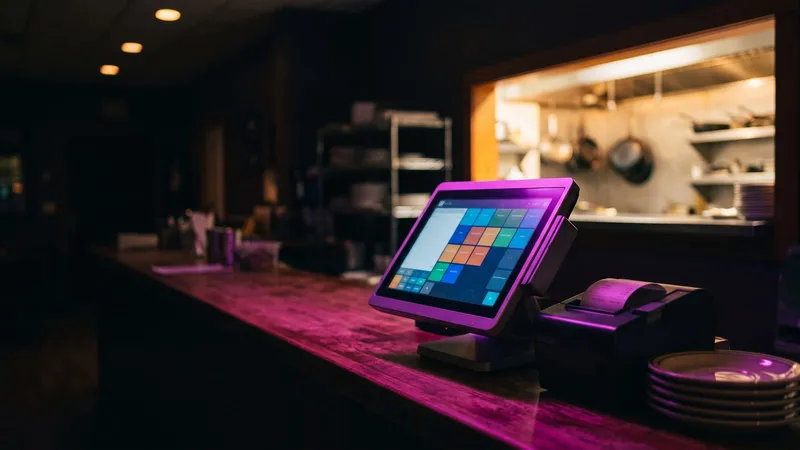
TL;DR: Worcester restaurant technology should be smaller than what owners are sold, and set up more carefully. Start with card payments that never store card data, a menu and hours that match on your website and Google listing, ordering you can see the true cost of, scheduling and tip settings that follow Massachusetts law, and guest Wi-Fi kept off the business network.
Worcester restaurant technology is mostly a question of order: which systems to get right first, and which should talk to each other. For a Worcester owner, the list is short.
What I notice when I look at Worcester restaurant technology is rarely a missing tool. It is the same menu typed into four places, a vendor's default password, and guest Wi-Fi that also reaches the office computer. Each is small. Together they cost money and hours.
How many restaurants are in Worcester County, and how many people work in them?
Worcester County had 1,748 food service and drinking place establishments with employees in 2023, employing 25,315 people in mid-March. Of those establishments, 1,317, or about 75%, had fewer than 20 employees. (U.S. Census Bureau, County Business Patterns 2023)
The Bureau of Labor Statistics counts the same industry a different way, from unemployment insurance records. For 2025 it shows 1,579 private food service and drinking place establishments in Worcester County, an average of 23,523 jobs, and an average weekly wage of $570, an average that includes part-time jobs. (BLS, Quarterly Census of Employment and Wages, 2025) The two counts differ by method.
Most restaurants here are small, the owner makes technology decisions between services, and Worcester restaurant technology has to work without an IT department.
Which Worcester restaurant technology matters most?
If I had to rank Worcester restaurant technology for a small place: card payments first, because the PCI Council warns a breach can cost a business the ability to accept cards. Then the menu, hours and ordering link people find on Google and your website, where, in my experience, new customers decide. Then ordering fees, payroll and tip settings, food cost, the network, and reviews, in that order.
What should a small restaurant know about card payments and PCI?
The card industry's security standard, PCI DSS, applies to "entities that store, process, or transmit cardholder data." (PCI Security Standards Council) A restaurant that takes a card is in that group. The Council's guide notes that small merchants usually confirm where they stand with a self-assessment questionnaire; your payment provider can tell you which one applies to you.
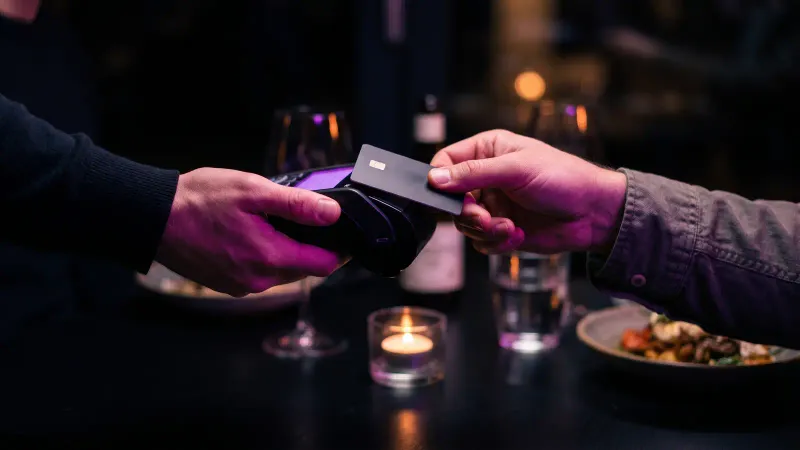
For Worcester restaurant technology, the Council's guide for small merchants comes down to a few habits:
- Don't keep card data. The guide says "the best way to protect against data breaches is not to store card data at all."
- Use encrypting terminals. Terminals that are part of a PCI-listed point-to-point encryption solution "provide merchants the best assurance about the quality of the encryption."
- Change default passwords on terminals, routers and back-office software, and ask your vendors whether they changed theirs.
- Lock down vendor remote access. If a POS vendor needs to connect remotely, require multi-factor authentication and turn the access off when they are done.
(PCI Security Standards Council, Guide to Safe Payments, 2024)
One Massachusetts rule catches Worcester restaurant technology configured for other states. State law says "no seller in any sales transaction may impose a surcharge on a cardholder who elects to use a credit card in lieu of payment by cash, check or similar means." Discounts for paying cash are allowed. (M.G.L. c. 140D, section 28A) The state Division of Banks has said the ban also stops a seller from "hiring a third party to impose the surcharge." (Massachusetts Division of Banks, Opinion 98-239) If a new point of sale system offers a card surcharge setting, ask your attorney before you turn it on. Brian wrote up the Massachusetts credit card surcharge rules (opens in a new tab), including what cash discounts are allowed.
Reservations with a card hold follow the same logic: a tool that keeps the card with the payment processor as a token keeps the number out of your Worcester restaurant technology. The PCI guide's advice is to ask your provider to tokenize or encrypt.
How do online ordering and third-party delivery fees work?
Delivery apps charge restaurants in layers, easiest to see where a city has written them into law. New York City caps what delivery apps may charge a restaurant: delivery fees at 15% of each online order, basic service fees such as order processing and listing at 5%, enhanced service fees at 20%, and transaction fees at 3%, each with limited exceptions. (NYC Department of Consumer and Worker Protection) The city enforced those caps in April 2026 with a settlement requiring more than $580,000 in restitution to more than 380 restaurants. (NYC Mayor's Office, April 2026)
Those caps are New York City law, not Massachusetts law, but they make a good checklist of fee types to look for in your own contract. As an example of the arithmetic: A $40 delivery order charged a 15% delivery fee and a 3% transaction fee costs the restaurant $7.20 before food, labor or packaging. A pizza shop in Millbury doing 300 of those orders a month would pay $2,160 in fees at those rates. Whether that pays depends on how many of those customers would have found you anyway.
Worcester restaurant technology gives you more control than it seems. On a Google Business Profile, a restaurant can add its own ordering link, mark a preferred provider for pickup or delivery, and remove a third-party provider; Google says providers "must remove third-party links from a profile within 5 business days" once the business asks. (Google Business Profile Help)
A common setup keeps the apps for reach and sends regulars to ordering on your own website. What matters in Worcester restaurant technology is that orders from every channel arrive in one place, with the same menu and prices.
Why do the menu and hours on your website and Google listing matter so much?
Because people check them before they come. Google says "businesses with complete and accurate info are more likely to show up in local search results." (Google Business Profile Help) Wrong holiday hours send a hungry family to a locked door.
Two pieces of Worcester restaurant technology, your website and your Google listing, are connected. Google says it "may transcribe menu data from your business website" to your Business Profile, and that menu edits made directly in the profile can take 24 to 48 hours to show on Maps and Search. (Google Business Profile Help, menu editor) In my experience, a menu posted as a photo or scanned PDF is the one most likely to be out of date; a menu written as text is easier to keep right.
Structured data helps machines read the page. The schema.org vocabulary has a Restaurant type with properties for the menu, cuisine, opening hours and reservations. (schema.org, Restaurant) Google's guidance for local businesses recommends the menu URL, cuisine and opening hours specifically. (Google Search Central) Clear, structured pages also give AI assistants something accurate to quote; our note on answer engine optimization for small business explains how.
Massachusetts adds one line. The Department of Public Health says printed menus and menu boards must carry this notice: "Before placing your order, please inform your server if a person in your party has a food allergy." (Mass.gov, Food Allergen Awareness FAQs) The state rule names printed menus and boards, and some local boards of health go further: Natick's asks for the notice on take-out, drive-through and website menus too. (Natick Board of Health) Your local board of health can tell you what it expects.
If your tables use QR codes for the menu, check them now and then for a sticker placed over the real one. I wrote about how QR code phishing works (opens in a new tab); a restaurant table is where people scan without thinking. If you want a quick outside read on your site, LTFI offers a free website grade (opens in a new tab).
How should scheduling, payroll and tip rules shape your Worcester restaurant technology?
Most scheduling and payroll tools are built for the whole country. Check each Worcester restaurant technology setting against Massachusetts rules.
- Wage rates. The minimum wage is $15.00 an hour, and the service rate is $6.75 for workers who serve customers and make more than $20 a month in tips. (Mass.gov, Massachusetts law about minimum wage)
- Card tips are tips. State law defines a tip to include "any amount designated by a credit card patron," and tips paid to the employer must reach the employee "by the end of the same business day." No one may take "any payment or deduction from a tip or service charge." (M.G.L. c. 149, section 152A) A payroll setting that subtracts card processing fees from tips deserves a hard look.
- Tip pools and service charges. The same law says a service charge goes to wait staff, service employees or service bartenders, and that a house or administrative fee needs a written description telling the guest it is not a tip.
- Short shifts. If an employee scheduled for 3 hours or more is sent home, the employer must pay at least 3 hours at minimum wage. (Mass.gov, hours and conditions of employment)
None of this is legal advice, and rules change. Before you sign for any Worcester restaurant technology, ask the vendor to show you each of these settings working.
Can Worcester restaurant technology help with food cost and inventory?
It can, mostly by making price changes visible sooner. In a Census Bureau survey collected October 5 to 18, 2026, 50.2% of accommodation and food service businesses said the prices they pay had gone up in the past two weeks, while 16.6% said they had raised their own prices. Looking six months out, 42.0% expected to raise prices. (U.S. Census Bureau, Business Trends and Outlook Survey)
Menu prices are already moving. The USDA reports that restaurant and other food service prices in September 2026 were 3.5% higher than a year earlier, and that retail beef and veal prices were up 3.5%, with beef forecast to rise 8.7% for 2026. (USDA Economic Research Service, Food Price Outlook, October 2026)
Worcester restaurant technology does not set your prices, but it can:
- Cost each recipe from current invoice prices, so you see the margin on a burger change when beef changes.
- Feed item sales from the point of sale into inventory, so a count tells you what went missing, not just what is left.
- Change a price once. When a dish goes from $16 to $17, the point of sale, your website menu, your Google menu and every delivery menu should all change together.
That last one is an integration problem. Our note on API integration covers how Worcester restaurant technology can pass data like this on its own, and our note on vendor lock-in covers what to ask before one vendor holds your menu and sales history.
Why should guest Wi-Fi be separate from the business network?
Because customers' phones and your card terminals should never share a network. The PCI Council's guide says: "If your shop offers free Wi-Fi for your customers, make sure you use another network for your payment system." (PCI Security Standards Council)
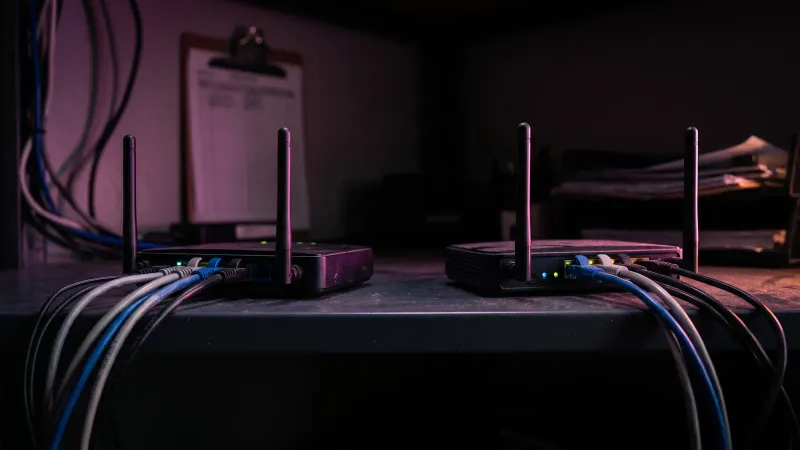
The FTC gives small businesses the same advice: if you offer Wi-Fi to guests and customers, "make sure it's separate from and not connected to your business network." (Federal Trade Commission, Cybersecurity for Small Business)
In practice, Worcester restaurant technology often needs three networks: one for guests, one for staff phones, and one for the terminals, kitchen printers and office computer. Kitchens already separate raw and ready-to-eat food; I wrote about what a restaurant kitchen teaches about building safety in (opens in a new tab), and the network is the same idea.
How should a restaurant handle online reviews?
Reviews move real revenue for independent restaurants. A Harvard Business School study found "a one-star increase in Yelp rating leads to a 5-9 percent increase in revenue," with the effect driven by independent restaurants rather than chains. (Luca, Harvard Business School)
The rules are clear too. A federal rule finalized in August 2024 bans paying or rewarding customers for reviews "expressing a particular sentiment, either positive or negative," and bars using threats or intimidation to keep a negative review down. (Federal Trade Commission, August 2024) Review sites add their own policies, so asking every guest with no reward attached is the simplest path. Brian covered whether it is legal to ask customers for Google reviews (opens in a new tab).
Answering matters as much as asking. Google's guidance is that when you reply to reviews, "you show them that you value their feedback." (Google Business Profile Help) A short, specific reply to a complaint is read by every future guest.
What does Worcester restaurant technology look like for a small place?
For a hypothetical breakfast place in Spencer with twelve staff, a first month of Worcester restaurant technology work might be:
- Week one: payments. Encrypting terminals, no default passwords, vendor remote access off when unused, no surcharge setting.
- Week two: one menu. One source of truth for items and prices, posted as text with the allergen notice, matched on Google and every delivery menu.
- Week three: the network and payroll. Split guest Wi-Fi off, and walk through tips, service charges and short-shift pay with whoever runs payroll.
- Week four: ordering and reviews. Add your own ordering link on Google, work out what each delivery order nets, and reply to every new review.
None of this needs a new system on day one. Most of it is setting up the Worcester restaurant technology you already pay for, and connecting it.
Frequently asked questions
What Worcester restaurant technology does a small restaurant need first?
Card payments that never store card data, a menu and hours that match on your website and Google listing, and guest Wi-Fi kept off the network your terminals use.
Does PCI apply to a small restaurant?
Yes. PCI DSS applies to any business that stores, processes or transmits cardholder data. Your payment provider can tell you which self-assessment questionnaire applies.
Can a Massachusetts restaurant add a credit card surcharge?
State law bars a seller from adding a surcharge when a customer pays by credit card. Cash discounts are allowed. Ask an attorney before turning on any surcharge setting.
Do I have to put the allergy notice on my online menu?
The state rule names printed menus and menu boards; some local boards of health also ask for it on website menus. Your board of health can confirm.
Should guest Wi-Fi be on the same network as my card terminals?
No. The PCI Security Standards Council and the FTC both advise a separate network for customer Wi-Fi.
How many restaurants are there in Worcester County?
Census counted 1,748 food service and drinking place establishments with employees in Worcester County in 2023, about three quarters of them with fewer than 20 employees.
This article is general information, not legal advice. Kief Studio is not a law firm, and reading it does not create an attorney-client relationship. Laws and regulations change, so check the current text and talk with a licensed Massachusetts attorney about your situation.
Where we fit
Kief Studio is in Shrewsbury, and we work with businesses in Worcester, Millbury, Spencer, Grafton and across Central Massachusetts. Managed website operations means one studio runs your whole website: hosting, design, writing, publishing, search, and security. Your website should not be a second job. If you only need a simple site, kiefstud.io offers a free website for your business.
On search, we write true pages, structure them, and keep the site fast, so search, maps and AI answers can read your menu and hours. Where your point of sale, online ordering and accounting do not talk to each other, API integration connects the software you already pay for so data moves between systems on its own, built on authorized APIs only, and watched so a failed sync gets noticed. For a group with more than one location or a real online store, we connect checkout, payments, and inventory so stock is right everywhere. More on managed website operations and our work for Worcester businesses.
First conversation is free. No commitment.
Co-founder and CEO, Kief Studio