


Brian GagneCo-founder and CTO, Kief Studio
- Published
- 13 min read
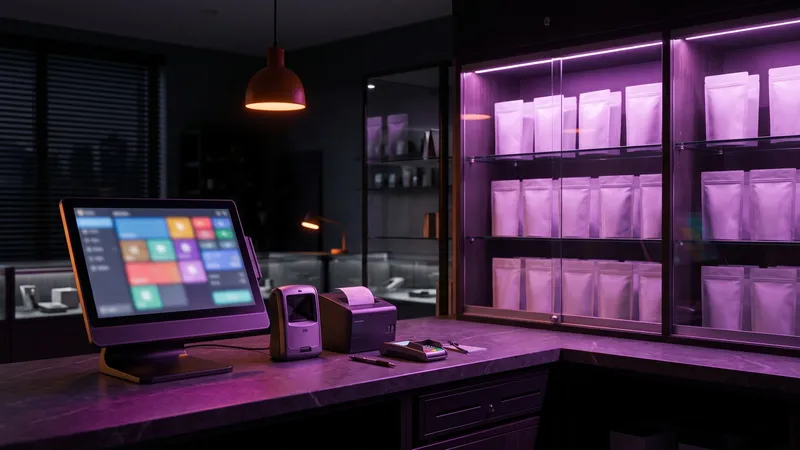
TL;DR: Cannabis technology in a licensed Massachusetts operation is seven connected systems: the state's Metrc tracking record, an approved point of sale, inventory counts, ID checks with tight data limits, video and alarms, cash handling, and records an inspector can read. 935 CMR 500 sets rules for each. The daily work is keeping them in agreement.
Cannabis technology in Massachusetts is mostly about records. A licensed cultivator, manufacturer or dispensary runs several pieces of cannabis technology at once, and the state expects all of them to tell the same story: what came in, what moved, what sold, who bought it, and what the cameras saw. You already know the plant side. This is the cannabis technology side, read straight from 935 CMR 500, the Cannabis Control Commission's adult use regulations. I will not name products except the one the state chose for you.
What does cannabis technology in Massachusetts have to do?
The map of cannabis technology, one rule set per piece:
- Seed-to-sale tracking. The state's system of record for every plant and package.
- Point of sale. What the register must refuse, and what it may never do to sales data.
- Inventory. Monthly and annual counts, and the records that prove them.
- Age verification and customer data. Checking ID twice, and keeping almost nothing else.
- Video and alarms. Cameras, retention, timestamps, failure alerts and backup power.
- Cash handling. Safes, cameras on the cash, armored transport.
- Records and audits. Everything above, available to the Commission on request.
Most cannabis technology problems I see do not live inside one system. They live in the gaps between two of them.
What does 935 CMR 500 require from seed-to-sale tracking?
The state's tracking system, the one piece of cannabis technology it chose for you, is Metrc. In the Commission's words, "All licensees in Massachusetts must use Metrc to track all marijuana products that are cultivated, manufactured, transported, tested, and sold throughout the Commonwealth." (Cannabis Control Commission, Metrc (opens in a new tab)) The Commission describes it as a web-based system that "uses radio frequency identification technology and serialized plant and package tags." (Cannabis Control Commission, Seed-to-sale Tracking (opens in a new tab))
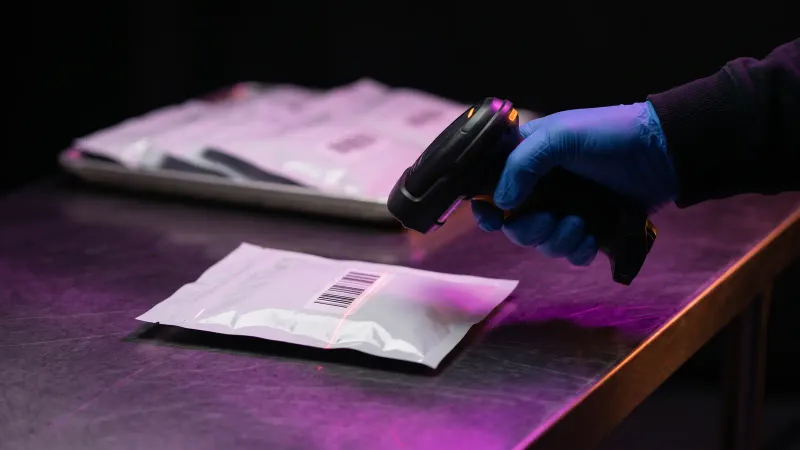
The regulation behind it is 935 CMR 500.105(8). A few lines matter most for your cannabis technology (935 CMR 500.105 (opens in a new tab)):
- "Real-time inventory shall be maintained," covering plants in every phase, product ready for sale, and damaged or expired product awaiting disposal.
- "The failure to enter inventory into the Seed-to-sale SOR may result in the suspension or revocation of a Marijuana Establishment License."
- For a co-located medical and adult use operation, "After the point of sale, there shall be a reconciliation of that inventory in the SOR."
Two lines from the Commission's guidance are worth taping to the wall. On harvests: "at the end of day physical inventory must match Metrc." On software: "If a Licensee chooses to upload their inventory through their third-party API, they must ensure the figures entered reflect accurate inventory." (Cannabis Control Commission, Seed-to-sale Tracking (opens in a new tab))
Read those side by side. The state allows cannabis technology to automate the upload, and responsibility for what it sends stays with you.
Why the numbers drift, and how to correct a discrepancy, is covered in METRC ghost inventory: why your POS and the state disagree, so I will not repeat it here.
What does the state require from a dispensary point of sale?
Section 500.140(5), "Recording Sales," reads like a spec sheet for the cannabis technology at your register (935 CMR 500.140 (opens in a new tab)):
- "A Marijuana Retailer shall only utilize a point-of-sale system approved by the Commission, in consultation with the DOR."
- "A retailer is prohibited from utilizing software or other methods to manipulate or alter sales data."
- A retailer "shall conduct a monthly analysis of its equipment and sales data" to confirm no such software exists, and keeps records of it.
- "The Commission and the DOR may audit and examine the point-of-sale system used by a retailer."
Your cannabis technology also enforces the purchase limit at the register. A retailer "shall demonstrate that it has a point-of-sale system that does not allow for a transaction in excess of the limit," which is one ounce of flower per customer per day, or five grams of active THC in concentrate, or 500 milligrams of active THC in edibles. (935 CMR 500.140 (opens in a new tab))
Between the register and the state, the Commission says retailers "can utilize an API, CSV file, or manual upload," that "All sales must be recorded under the appropriate license in Metrc," and that a duplicated or misassigned sale is voided receipt by receipt and reconciled "in Metrc and point-of-sale system within 24 hours." (Cannabis Control Commission, Seed-to-sale Tracking (opens in a new tab))
A retailer in Fitchburg with three registers might put four cannabis technology checks on a one page monthly checklist:
- Export the month's voids and edits from the register and from Metrc, and confirm every void was reconciled in both within 24 hours.
- Run the monthly sales data analysis the rule requires, sign it, date it and file it.
- Ring a test sale one gram over the daily limit on each register and confirm all three refuse it.
- Pull the list of user accounts on the register and remove anyone who has left.
That is about an hour a month, and it turns three rules into evidence you can hand an inspector.
How do you keep inventory accurate between counts?
Under 935 CMR 500.105(8), an establishment must "Conduct a monthly inventory of Marijuana in the process of cultivation and finished, stored Marijuana" and a comprehensive inventory every year. Each record shows the date, a summary, and "the names, signatures, and titles of the individuals who conducted the inventory." (935 CMR 500.105 (opens in a new tab))
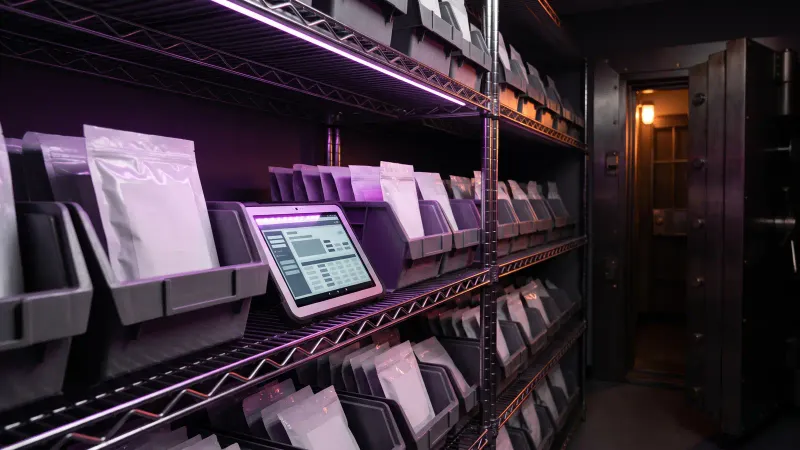
A discrepancy is a reportable event. Under 935 CMR 500.110(9), law enforcement and the Commission must be notified "immediately and, in no instance, more than 24 hours following discovery," and the first item on the list is "Discovery of inventory discrepancies." So is "Any loss or unauthorized alteration of records related to Marijuana." A written incident report follows within ten calendar days. (935 CMR 500.110 (opens in a new tab))
Put those together. If a count can start a 24 hour clock, your cannabis technology has to make the count fast, signed and comparable to Metrc on one screen. Cannabis technology habits that hold up:
- Count against the state record. The comparison that matters is physical versus Metrc.
- Capture who counted at the moment of the count. Names, signatures and titles are required.
- Keep the history. Each count is a new record. Never overwrite last month's.
- Name who calls it in. One person decides whether a gap is reportable, plus a backup.
The same pattern shows up in every regulated industry; our note on compliance data integrity covers it outside cannabis.
What do age verification and customer data rules mean for your cannabis technology?
ID gets checked twice in a Massachusetts store: on entry, where nobody is admitted unless the retailer "has verified that the individual is 21 years of age or older," and again at the point of sale. (935 CMR 500.140 (opens in a new tab)) Your website is cannabis technology too: the advertising rules prohibit "Operation of any website of a Marijuana Establishment that fails to verify that the entrant is 21 years of age or older." (935 CMR 500.105 (opens in a new tab))
The data side is stricter than most retail. The statute keeps customer data to "information typically required in a retail transaction" (M.G.L. c. 94G, section 4 (opens in a new tab)), and the regulation says a retailer "may not record or retain any additional personal information from Consumer without the Consumer's voluntary written permission." Delivery data is limited to five fields (name, date of birth, address, phone and email), "used solely for the purpose of transacting a delivery." (935 CMR 500.140 (opens in a new tab))
For your cannabis technology, that means:
- An ID scanner that saves full license images by default needs a hard look at what it keeps.
- A loyalty program or email list needs a stored record of each customer's written permission.
- Delivery data gets fenced off from marketing tools.
- Every establishment needs "A plan describing how Confidential Information and other records required to be maintained confidentially will be maintained," and co-located medical operations separate sales areas "for the purpose of Patient Confidentiality." (935 CMR 500.140 (opens in a new tab); 935 CMR 500.105 (opens in a new tab))
The cannabis rules also point to the state's general data security standard, 201 CMR 17.00, by name for delivery body camera video. (935 CMR 500.110 (opens in a new tab)) My wife Amelia, Kief Studio's co-founder and CEO, wrote a guide to Massachusetts WISP requirements under 201 CMR 17.00 (opens in a new tab) that walks through what a written information security program covers.
What do the security rules say about video, alarms and logins?
Section 500.110(5) is where most of the cannabis technology hardware lives. For an establishment in a building, it requires, among other things (935 CMR 500.110 (opens in a new tab)):
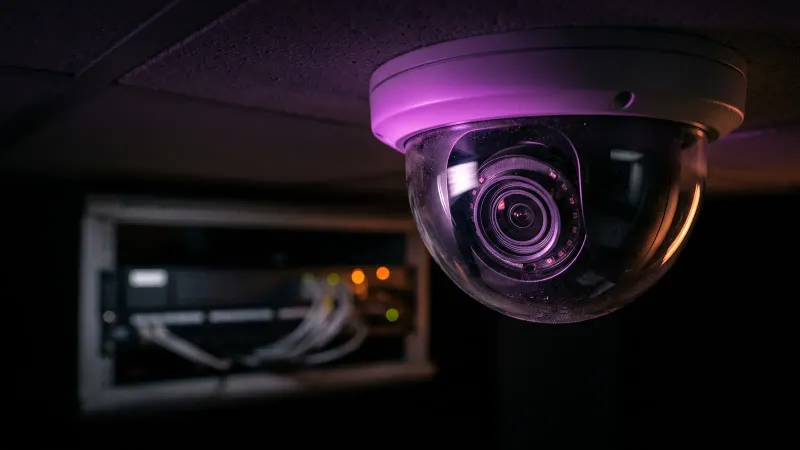
- A failure notification that alerts designated employees "within five minutes after the failure, either by telephone, email or text message."
- Cameras on safes, vaults, sales areas and wherever product or cash is handled.
- Recording 24 hours a day, viewable by the Commission on request "for at least the preceding 90 calendar days" or longer if the Commission asks you to preserve them.
- "A date and time stamp embedded in all recordings, which shall be synchronized and set correctly at all times."
- The ability to stay up for at least four hours in a power outage.
- Recordings "erased or destroyed prior to disposal."
- A backup alarm system from a different company than the primary, or accepted alternate safeguards.
Every year, each establishment also needs "a security system audit by a vendor approved by the Commission," with the report due within 30 calendar days. (935 CMR 500.110 (opens in a new tab))
Read as cannabis technology, that means ninety days of 24 hour video from every camera needs its own storage plan. The recorder's clock needs to stay synced. The five minute alert only works if someone owns the phone it rings. Old drives need a documented wipe before they leave the building. I wrote about disposing of old business computers in Massachusetts (opens in a new tab), and the same documented wipe applies to recorder drives.
The Commission has also warned about the human side of cannabis technology. A 2022 bulletin on "social engineering schemes and frauds" asked licensees to verify "all email domain names, phone calls and text messages" before acting, and to make sure agents "are not sharing password, pins or other credentials utilized to access email accounts and point-of-sale system." (Cannabis Control Commission bulletin, August 8, 2022 (opens in a new tab)) When an agent leaves, I keep an offboarding checklist for cutting IT access the same day (opens in a new tab).
MyRHC keeps an index of the cannabis facility security requirements (opens in a new tab) if you want the official sources in one place.
How do banking and cash handling touch your cannabis technology?
Briefly. Under 935 CMR 500.110(7), an establishment handling cash needs a locked safe or vault separate from the sales area, cameras where cash is kept and packaged, a written deposit process, and a licensed armored transport provider approved by the bank or the Department of Revenue. (935 CMR 500.110 (opens in a new tab))
On the bank's side, FinCEN's 2014 guidance FIN-2014-G001 tells institutions serving marijuana businesses to verify state licensing and develop "an understanding of the normal and expected activity for the business," then keep monitoring for suspicious activity. (FinCEN, FIN-2014-G001 (opens in a new tab))
Federal status moved in 2026: an order published April 28 placed marijuana under a state medical marijuana license in Schedule III. A DEA hearing on moving all marijuana to Schedule III ran from June 29 to July 15, the last written briefs were filed November 5, and the judge had not issued his recommendation as of November 9. (Federal Register, April 28, 2026 (opens in a new tab); Federal Register, notice of hearing (opens in a new tab); Morgan Lewis, September 24, 2026 (opens in a new tab); The Marijuana Herald, November 6, 2026 (opens in a new tab)) What that means for your account is a question for your bank and your attorney.
Where cannabis technology comes in is simpler. When register totals, Metrc sales and counted cash agree day after day, "normal and expected activity" is easy to show.
What does audit readiness look like for a cannabis business?
The standard is short: "Records of a Marijuana Establishment shall be available for inspection by the Commission, on request." The list behind it, in 500.105(9), covers operating procedures, inventory and seed-to-sale records, personnel records, sales records with "the quantity, form, and cost of marijuana products," and waste records. Training records are kept four years. (935 CMR 500.105 (opens in a new tab))
A good test of your cannabis technology takes one afternoon. Pick a random package sold in the last 60 days and time how long it takes to produce:
- Its full Metrc history.
- The receipts that sold it, from the register.
- The inventory count records that included it, with names and signatures.
- Thirty seconds of video of the sale, with a correct timestamp.
- The monthly sales data analysis for that month.
If all five come back inside an hour, your cannabis technology is in good shape. If one needs a person who is on vacation, you found your next cannabis technology project.
What is happening with cannabis in Central Massachusetts right now?
Worcester is where the regulator lives: the Commission's headquarters is at Union Station, 2 Washington Square. (Cannabis Control Commission, Contact (opens in a new tab)) I counted from the Commission's commence operations licensing file, updated October 20, 2026: 788 active licenses statewide, 142 of them in Worcester County, including 66 retail, 27 cultivation and 18 medical treatment center licenses. (Cannabis Control Commission, Data Catalog (opens in a new tab)) The Commission notes that the data is self-reported by licensees.
Statewide, adult use sales passed $1.65 billion in 2025 across 46.3 million transactions, totals the Commission reports "based on data input by licensees into the state's seed-to-sale system of record, Metrc." (Cannabis Control Commission, January 2026 (opens in a new tab)) The state's public numbers are built from what your cannabis technology enters.
The state vote is settled. On November 3, 2026, Massachusetts voters rejected Question 8, which would have repealed the laws for retail sale of adult use marijuana and closed adult use stores by 2028. It lost in every city and town, with 75.6% voting no and nearly 99% of the vote counted in the Associated Press tally as of November 9. (Boston.com, November 9, 2026 (opens in a new tab); STAT, November 4, 2026 (opens in a new tab); WBUR, November 4, 2026 (opens in a new tab); Secretary of the Commonwealth, Question 8 (opens in a new tab)) Adult use and medical sales both continue, so cannabis technology keeps answering to 935 CMR 500 and, for medical, to the same real-time inventory and tagging requirements in 935 CMR 501. (935 CMR 501.105 (opens in a new tab)) MyRHC indexes the official sources on its Massachusetts Cannabis Control Commission framework (opens in a new tab).
Frequently asked questions
What seed-to-sale cannabis technology does Massachusetts use?
Metrc. The Cannabis Control Commission requires every licensee to use it, with RFID and serialized plant and package tags.
Can a dispensary use any point of sale system in Massachusetts?
No. Under 935 CMR 500.140 the system must be approved by the Commission with the Department of Revenue, block sales over the daily limit, and be checked monthly for software that could alter sales data.
How long must a Massachusetts cannabis business keep security video?
At least the preceding 90 calendar days, or longer if the Commission asks for them to be preserved, with a synchronized date and time stamp.
Do inventory discrepancies have to be reported?
Yes. Under 935 CMR 500.110(9), they go to law enforcement and the Commission within 24 hours, with a written incident report within ten calendar days.
What customer information can a retailer's cannabis technology keep?
Only what a normal retail transaction needs, including age, unless the customer gives voluntary written permission. Delivery data is limited to five fields used only for the delivery.
Did Question 8 change seed-to-sale tracking in Massachusetts?
No. Voters rejected Question 8 on November 3, 2026, so adult use and medical sales continue under the Commission, and the tracking rules that cannabis technology answers to in 935 CMR 500 and 935 CMR 501 stay in force.
This article is general information, not legal advice. Kief Studio is not a law firm, and reading it does not create an attorney-client relationship. Laws and regulations change, so check the current text and talk with a licensed Massachusetts attorney about your situation.
Where we fit
Cannabis technology is the operations software that keeps seed-to-sale records and state reporting in agreement, for operators who cannot afford a mismatch between what the shop did and what the state sees. Kief Studio builds and hosts cannabis technology for licensed businesses. We confirm licenses, scope and which integrations you are authorized to use, build inventory, packaging and sales workflows that match the state record, connect to Metrc and your other tools through authorized APIs only, and host it on dedicated infrastructure so reports and operations stay reconciled. Metrc work is only for licensed operators who hold API access for their license; if an integration is not authorized, we say so and do not attempt it. We vet every cannabis client before work starts, and our ERP and data engineering work sits beside it.
We are in Shrewsbury and work with operators across Worcester and Central Massachusetts. You can read more about our cannabis technology work.
First conversation is free. No commitment.
Co-founder and CTO, Kief Studio