The Problem With Security Testing Today
Traditional penetration testing follows a predictable pattern: you hire a firm, wait weeks for scheduling, grant access to your systems, wait more weeks for testing, then receive a PDF report full of findings that are now several development cycles old.
By the time you see the results, the codebase has changed. Context has been lost. Fixing vulnerabilities means re-learning what you were thinking when you wrote that code months ago.
This model made sense when software shipped quarterly. It breaks down completely in an era of continuous deployment.
Meanwhile, running your own security tools requires significant expertise. Setting up Nmap, Nuclei, SQLMap, and dozens of other utilities takes time. Interpreting raw output takes experience. Most development teams don't have a dedicated security engineer watching every commit.
The gap between "we should test this" and "we actually tested this" keeps growing.
A Different Approach: Security Testing Inside Your AI Workflow

KS-LTFI-AI-Sec-Ops takes a fundamentally different approach. Instead of security testing being a separate activity you schedule, it becomes a natural part of how you already work.
If you're using an LLM like Claude from Anthropic or Grok from xAI in your development workflow, LTFI plugs directly into that conversation. You don't switch tools. You don't open new terminals. You ask your AI assistant to run a security assessment, fix all discovered problems, and it happens.
The platform exposes over 25 specialized AI agents across seven security departments:
- Web Security - Reconnaissance, directory fuzzing, vulnerability scanning, injection testing, CMS security analysis
- Network Security - Host discovery, service enumeration, vulnerability detection, lateral movement testing
- Cloud Security - AWS, Azure, and GCP security posture assessment with compliance framework validation
- OSINT - Email intelligence, social media analysis, phone and username tracking, domain reconnaissance
- Windows/Active Directory - AD enumeration, SMB analysis, Kerberos security testing, credential analysis
- Database Security - Multi-platform enumeration and authentication testing for MySQL, PostgreSQL, MongoDB, Redis, and SQL Server
- Web3/Blockchain - Smart contract security analysis for Ethereum and compatible chains
Each agent is designed to operate autonomously, orchestrating the appropriate tools and techniques based on your targets and objectives.
Built on a Custom Linux Distribution
At the core of LTFI is a custom Linux distribution built by Kief Studio.
The KS-LTFI-AI-Sec-Ops arm of this custom Arch Linux distro includes 36 professional-grade security tools covering every major testing category. But unlike traditional security distributions where you interact with tools directly, LTFI abstracts the complexity entirely.
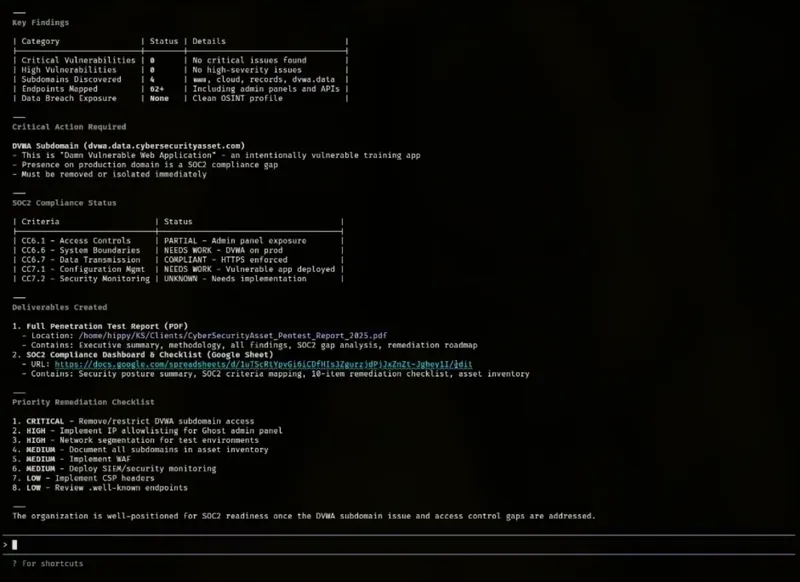
You don't need to know Nmap flags or Nuclei template syntax. You describe what you want to test, and the AI agents handle tool selection, execution, and result interpretation. What comes back is data that the coding agents can then use as context to fix the code, configuration issues, or settings, if provided enough access.
This architecture also means the platform stays current. As new tools and techniques emerge, we update the agents without requiring users to learn new command-line interfaces.
LLM Agnostic by Design
LTFI-AI-Sec-Ops is built on the Model Context Protocol (MCP), an open standard for connecting AI models to external tools and data sources.
This architectural decision means the platform isn't locked to any single AI provider. Any LLM that supports MCP can use LTFI's security agents, even if you host your own LLM.
In practice, we recommend Claude from Anthropic or Grok from xAI. We will be testing the system with the newer Gemini3 model from Google later in the week, but we can currently confirm that Grok and Claude handle security testing contexts exceptionally well, providing the reasoning capabilities needed to interpret results and the ability to remediate directly from the assessments. But the choice remains yours.
As new models are introduced, your security testing platform adapts with it.
How It Actually Works
The workflow is straightforward:
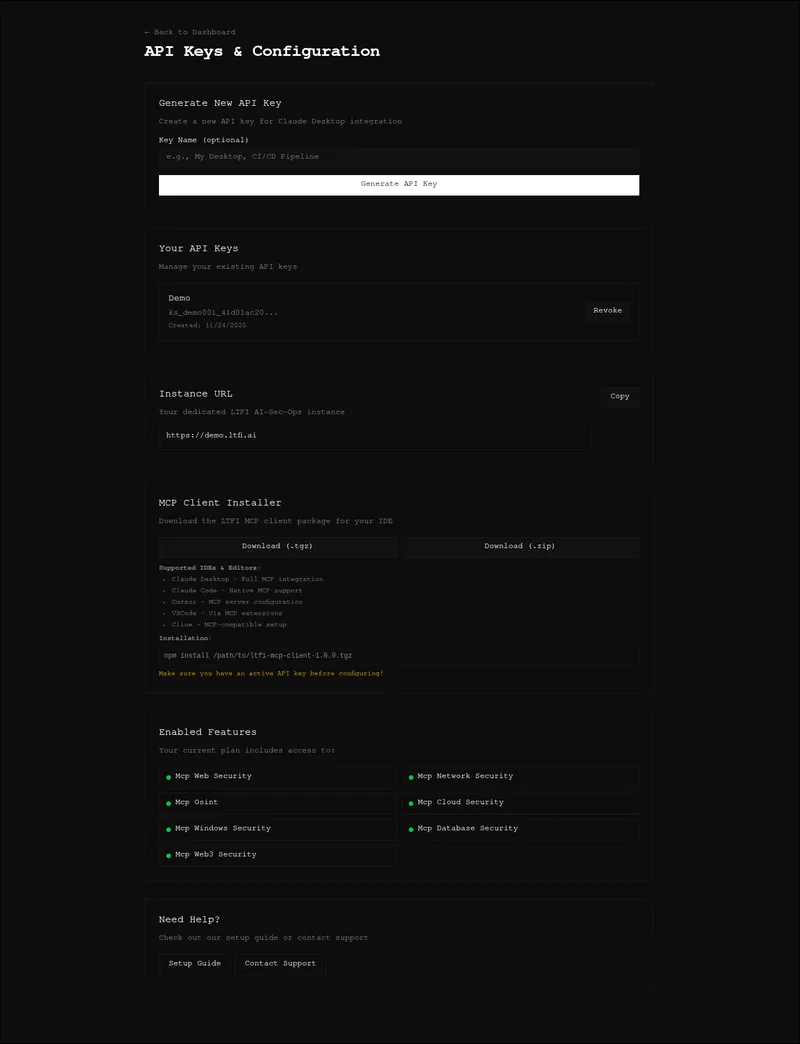
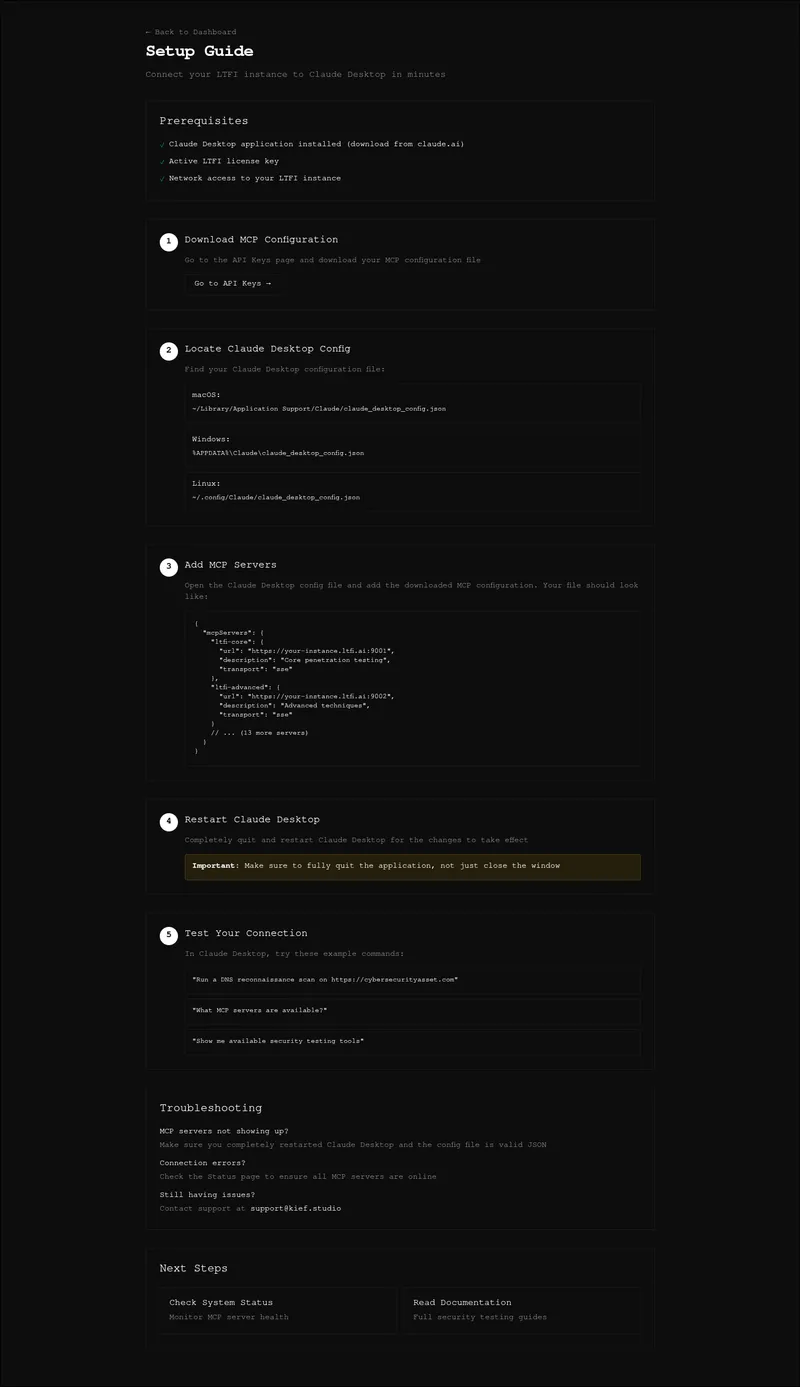
- Download your MCP configuration file from the customer portal
- Add the configuration to your LLM client (Claude Code, Gemini-CLI, Open Code, Claude Desktop, Windsurf, Cursor, Zed, VSCode, or any other MCP-compatible client)
- Test by asking your AI assistant to run security assessments against your authorized targets
That's the entire setup. No Docker configurations to maintain. No tool installations to troubleshoot. No infrastructure to manage.
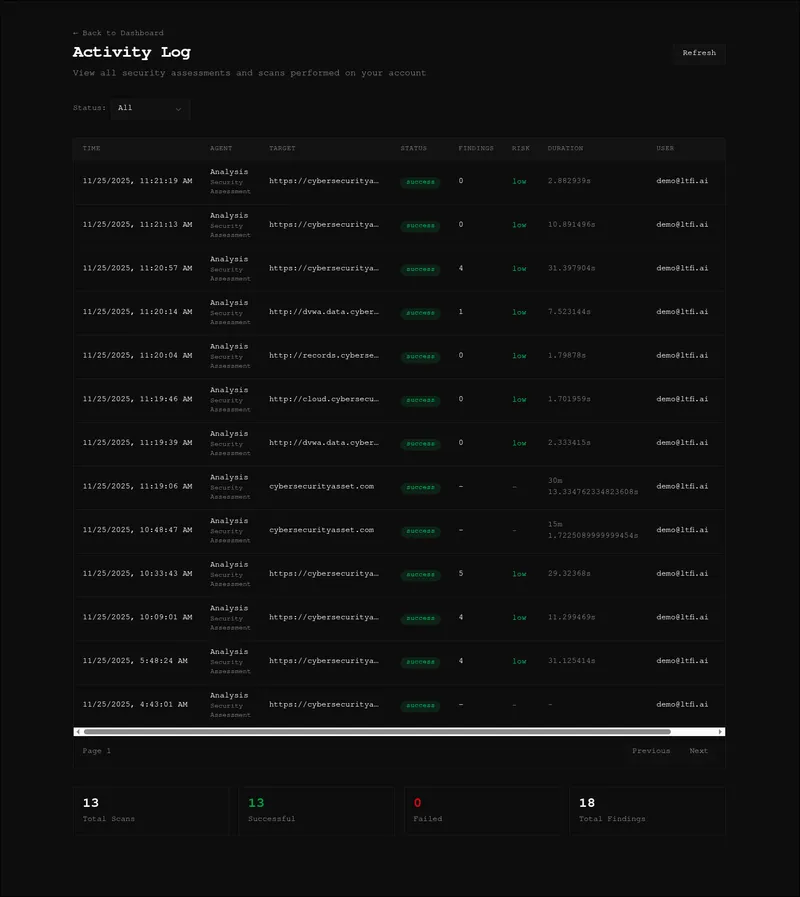
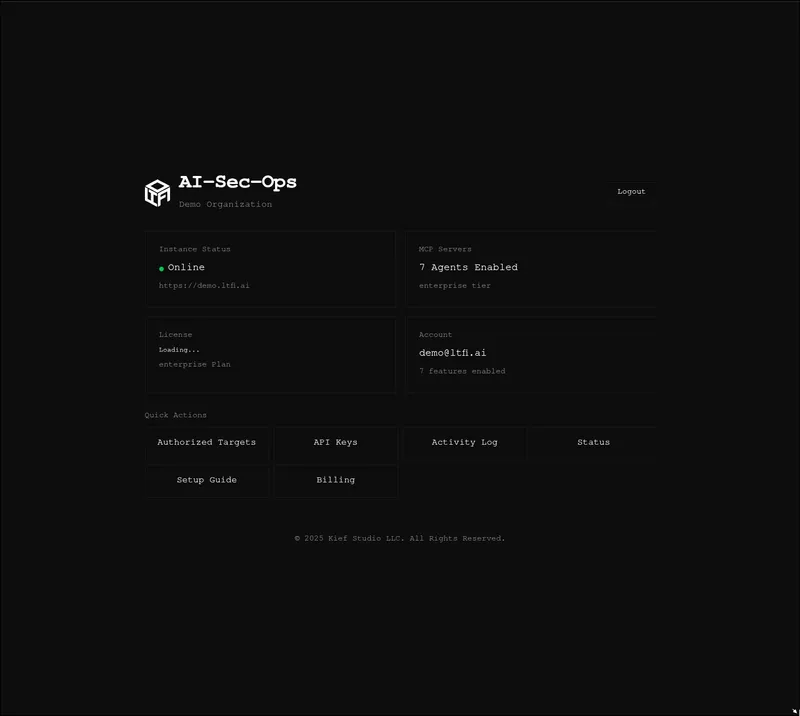
When you invoke a security agent, it runs against a fully isolated environment provisioned specifically for your organization. Complete audit trails track every operation. Team management lets you control who can test what.
The Shift to Continuous Security
The real value isn't any single feature. It's the shift in how security testing fits into your workflow.
When a full security assessment is as easy as asking a question, you run it more often. When injection testing takes seconds instead of hours, you test every endpoint instead of sampling a few. When results come back in the same conversation where you're designing the system, you catch vulnerabilities before they become technical debt.
This is what DevSecOps should feel like: security testing so integrated that it stops being a separate discipline and becomes part of how you build software.
Getting Started
Currently in beta, we are accepting a limited number of clients at $49/mo per seat. As we integrate new features, we will introduce new pricing tiers.
Every tier will include team management, complete audit logging, and dedicated infrastructure.
Questions about how LTFI could fit into your security program? Reach out at [email protected] or visit ltfi.ai to explore the platform.